
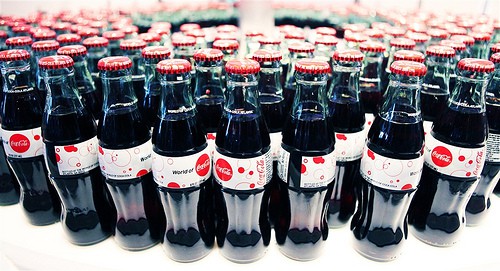
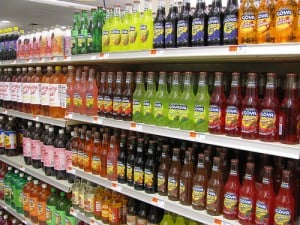
 I posted the information regarding New York’s request to ban food stamps from being able to purchase soft drinks (like soda pop… and I don’t wanna hear anyone complaining about me calling it pop, either) before I made up my mind in where I fell with it… because I don’t like to be reactionary. I’d rather think my decisions through before I go off ranting somewhere.
When my girl first showed me the link, I shrugged it off. “I mean, they already ban other things that they’ve deemed harmful… if you want more choice, get off government assistance.” I believe that most people who are for this kind of legislation all echo that same sentiment.
Then again, I’ll be honest. That felt like lazy thinking to me.
Let’s do a little quick math:
14% of the population is enrolled in the SNAP program (formerly known as food stamps). Roughly, that’s something like 41.8 million.
12.5% of the population is African-American. Even if the entire whole of the Black population in America was on food stamps… it would still not be only Blacks on food stamps.
Almost 10% of the population is unemployed. Even if the entire unemployed population was on food stamps, it would not only be unemployed Americans on food stamps.
Do you know how many Americans are considered at least overweight? At least 60%. So, subtract out the [maybe] 15% of people who are merely victims of being far too muscular and weigh more than the BMI thinks they should… and you’ve still got 45% of Americans who are overweight. So basically, there’s four times as many people in America who are overweight as there are on food stamps.
But wait… one final point.
Do you know how many Americans live beneath the poverty line? I can assure you… it’s way more than 41 million… and, even still, Blacks do not make up the majority of the impoverished population. Look at those numbers – clearly, everyone who is eligible for assistance… does not receive it.
It took me – maybe – 10 minutes to compute all those numbers. (Told y’all 10 minutes is valuable.)
 What does that mean? That those on government assistance are not all Black, not all unemployed (and therefore, assumedly, lazy welfare queens), and even if they were all overweight… guess what? There’s still another almost half of America that is just as overweight. So… let’s get over any assumptions of who and what food stamp recipients really are.
I’ve already written about the government making the decision to tax soda as a means of paying for health care. If the issue is money, I’m almost certain that if the government stopped overpaying for corn (or paying for it period?) they could find the money for health care. If the issue is the actual product, then saddle up, ride out… and ban it. No guts, no glory.
My question, really, is… what makes the food stamp recipients so worthy of this special attention that THEY would be prohibited from using their benefits to buy that which has already been deemed harmful by a government entity? Why do they get the honor of the government telling them what to do, and not the rest of us? Why do they get that “protection” and not all of us? Because the government should be allowed to control what they purchase? At least 60% of Americans are, by standard, overweight… and 14% of Americans are on food stamps. They’re obviously not the only ones who “are in need of the additional guidance.”
Or is it that we think that, because they are soooo poor that they need government assistance, that they obviously need us to tell them how to eat? Let’s face facts: The only difference between food stamp recipients and at least a third of America? It isn’t money. It’s the fact that they’re on government assistance. Period. The recession should’ve taught us that.
 Let’s assume that they’re really thinking, “We need to save them. We need to help them. We need to curb obesity, and since they rely on us for X, surely they also need our help to accomplish Y, as well.”
There are four thoughts that immediately come to mind:
For one, if this is about people who need outside help in addressing their weight (not their health, their weight), then – again – there’s at least another 45.9% of Americans outside of food stamp recipients that need to be addressed. Is pop a great place to start to rid ourselves of added sugar? Yes. Is the entire 14% of food stamp recipients guzzling down soft drinks? No. So why are we starting with the poor instead of the “middle class” who, by obvious definition, is also fat? Because the poor have the fewest lobbyists and are the easiest to target? Oh.
Secondly, this isn’t about prevention of purchases. This is about “You can’t buy it with the money we give you.” I’m sorry, but I immediately cringe at the thought of trying to force someone to change their choices instead of educating them on why another option is better. And before you question what “telling people how bad soda is for them” can do… remember what site you’re reading right now.
The fact that the Mayor of NYC would make a statement like “This initiative will give New York families more money to spend on foods and drinks that provide real nourishment.” about an “initiative” that prevents access instead of using education to allow the individual to make the appropriate decision… further lets me know how toothless this is. If you’re assuming they don’t know anything about food and drinks that provide real nourishment… it makes sense to, instead, make the decision for them? No. It would make sense to provide them education on proper nutrition. It may be soda today, but it’ll be some other new-fangled product tomorrow and they’ll need you to swoop in and save them then, too… because instead of helping them learn how to make their own decisions, you merely made the decision for them. No one learns from that.
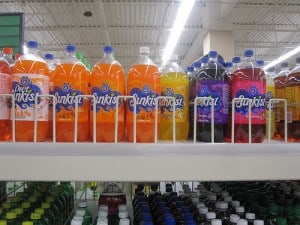 Thirdly, if we’re going to allow the government to dictate which items are good and bad… can you imagine how much money would come pouring in to “re-election campaigns” to prevent certain foods from being classified negatively? (Keep in mind, the current policy states that in order for a food to be considered ineligible for purchase with food stamps, it needs to be voted on by Congress.) The amount and opportunity for corruption at the expense of the public’s health… I can’t even imagine just how ridiculous and unfruitful it would be.
Lastly, if the Mayor of freaking New York City gave even a remote damn about the health, wellness and well being of those who rely on government assistance… perhaps he should spend a little time conversing with his constituents. Especially since one said the following right here on my own blog:
Also, if were going to make the argument that food stamp users should be spending on healthier choices, how bout we put some of those stores where [food stamp] users are?
If he believes food stamp recipients are so in need of assistance in regard to how to eat, why not actually talk to the individuals to find out what problems they face so that you’re not disillusioned about what problems they really face? Or is that too much conversation to be had with people who won’t be donating to a campaign any time soon? They have answers that are worth listening to… being on government assistance doesn’t equate to “being stupid.”
I don’t believe this is about truly addressing obesity in impoverished communities. I wholeheartedly believe this is about people wanting to feel like they can lord over “people who need it.” And lets face it – when you think of “overweight and poor” or “overweight and on government assistance,” you think Black (thanks to the “welfare queen” analogy) … and America is a country that is notorious for trying to rescue some needy Black [or Black-looking] people. Even in its philanthropic nature, it is ridiculously misanthropic. Deny that if you want… I’m okay with that.
So… if the question is “how do we address obesity among Americans” and I’m shooting down the “prevent the poor from buying soft drinks” answer… do I have an answer of my own?
Absolutely.
How about, for starters, paying some respect to the hierarchy of food needs and helping these people address these concerns first? Then, how about a little education? Teach people how the choices they make in food are in direct correlation to their ability to life healthily. Show people how poor food choices have contributed to poor health in America (or is that too much blame for “Big Food?”) and teach them how to avoid having to make those kinds of decisions. Educate them on how to use their food stamps to the best of their abilities. Be less elitist, insulting and classist – don’t assume that all food stamp users are some poor, lazy, clueless and shiftless individuals who clearly need your almighty interference. If the issue was truly obesity and if every single food stamp user was overweight, that still leaves almost half of the rest of the US population in need of the same kind of government involvement… and singling out the poor simply because they’re at the mercy of the government is little more than a politician’s toothless growl. Lots of bark… very little bite.
Update: And if you’re not completely talked out about this issue, Civil Eats is hosting a relatively interesting conversation about what questions this situation brings up. I don’t agree with it all, but both sides deserve representation on this issue.

76 comments
I still hold that the government has the right to put whatever restrictions they want on their programs. It’s like Section 8; you don’t get to arbitrarily live wherever you want. When someone is ASSISTING you, you can either accept the assistance with parameters or not. The government can make whatever strike against a problem they feel will help. Just because it’s not what would be BEST doesn’t mean it can’t be effective.
You don’t HAVE to have food stamps to eat. Like I said elsewhere, if your pop jones is that bad, save your pennies and fund it yourself.
And I still hold that there needs to be some kind of limits to the power that you give government. Sorry.
There’s no possible way you can tell me that nutrition is in any way comparable to Section 8. I cannot register that comparison with the information you’ve given me thus far… especially considering the blunders in nutritional information the government has made in the past 60 years.
Suppose you’re right, and suppose I agreed with you. I’ve already listed the information necessary in order for the government to make the appropriate changes to the policy. You really think, given the current process, that (A) the process would maintain its integrity and (B) the process would even begin, considering how much money would be at stake?
This is a tough one, Erika. I agree that the govt. shouldn’t be breathing down our necks. But soda is poison – it’s chemicals, food coloring and sugar. I’d like to think it didn’t even exist, because when kids get too fat, it’s because they drink the stuff. How ironic, though, that school lunches are pretty bad in the nutrition department.
Soda is a luxury. If I’m running low on funds and I have to choose between soda and something more nutritious, I’m not getting the soda. So why should people who are using free money get luxury items? It’s not awful to think governmental assistance should have boundaries. The purpose of food stamps is to provide the necessity of food to people. Soda is not a necessity. So should people who use food stamps be allowed to be alcohol with them? If we shouldn’t say no to soda, why say no to beer?
I cannot believe I’m about to say this, but… WHO says soda is a luxury? YOU? LOL
Do you realize what a “necessity” is when it comes to food? Suppose I agreed with that. Say I really and truly ran down the list of what you actually NEEDED to survive, and the government said “Okay, this is the bare bones list of what can be purchased with food stamps.” That’s not about nutrition… that’s about money. Because you’re not preventing food stamp recipients (FSR) from making any purchases… you’re just telling them what to do with government money… as if they can’t get any other money to fund or support their wants. As I mentioned above… these are people with jobs. If they want it.. they’ll get it. They don’t know WHY they shouldn’t have it.. they just know “the gov’t won’t let me buy it with their money.” If that’s enough for y’all, then it isn’t about nutrition for you either. It’s about punishment for being on government assistance.
I agree with you all the way. Soda is NOT A NEED!!! They need to cut some of these foodstamps. You dont know how I feel some days when I go in the store and see people buying shrimp, lobsters, crab, TBone steak with FOODSTAMPS….
So again… this isn’t about nutrition, this is about “poor people shouldn’t be eating better than me.” Again, someone needs someone to feel superior to – someone to lord over. Womp.
Maybe the issue isn’t food stamp recipients eating well. Maybe the issue is that you aren’t eating well enough. *shrug*
Exactly! I remember being a teenager and shopping with food stamps back when they were a big book of monopoly money that EVERYONE could see (and make opinions about). Our closest store was Berkeley Bowl, one of those health food stores that sells organic grains in bins and hip stuff like that.
My mother was a firm believer that just because we were poor did not mean we had to live off of corn chips and hot dogs (which, apparently is quite offensive to hard-working, tax-paying Americans…). Our diet consisted almost entirely of rice, fruit, vegetables and fish. Berkeley Bowl had this thing called “seafood medley” that was a bin of all the bits and pieces that had been cut off of their other seafood products and thrown together. It was cheaper than buying fillets, so we ate a lot of that!
STILL! Standing in line with my decadent… plums… and fish chunks in a plastic bag… all these hip, hemp wearing, patchouli smelling liberal ladies would stare at my transaction as soon as the monopoly money came out. They’d raise their eyes, flare their nostrils, shift uncomfortably, sometimes outright scowl. How DARE I shop in the same store and buy the same high-quality produce as them, using THEIR tax money?? Now, on special occasions, like birthdays when we actually splurged for angel food cake or shrimp? Geeze.. I think I still have scars from the holes these ladies burned into my flesh with their eyes…
So DON’T act like it’s about concern for the health of the poor! It’s CONTEMPT, plain and simple. My mother had a severe mental illness that prevented her from even leaving our apartment on many days, hence my doing the shopping. Because of that, we should have eaten beans, rice and hot dogs, only purchased from the seediest of sources. After all, beggars can’t be choosers.
I am one of the 14% that is using government assistance. I do not plan on needing the governments help forever and am working as well as going to school. I thank God for the help. In order to show my true appreciation, and to help myself and my family, I do my best to make sure we eat healthy as well as help by giving to anyone who needs food (i.e. Our church food give away). I dont normally get soda but it is my alcohol. When I have a HORRIBLE TERRIBLE day, I will have a can of ‘Sprite’. It’s fair to say that most of the time Im getting water. In my church we talk alot about helping others. When you give money to someone, you cannot dictate what they do with it. You can only hope they will do what is right. If what they do with it will be a major issue for you, you should not give it. You are to give out of the kindness of Christ who lives in you. If anything, lower the price of some of the fitness clubs. Im almost willing to bet that membership will increase. Make it easier for people to see a dietician. I tried to make an appointment and the closest date was 6-8 months away(and I know from staff that the dietician was not that busy) Start a monthly, trimonthly, pamplet about being health wise. There are many other things that can be tampered with that will make a overal positive change in the NATION not just the 14% of the nation.
I can’t advocate a business lowering their prices to accommodate anyone against their will… but I don’t even know that I believe a dietician is going to be of any assistance in this kind of situation just because they’re going to spout the same information that the government has been spouting for the past few decades… and really, I mean.. really, that’s done us NO good.
I’m just… intrigued… by the idea that we’re holding people to standards that we don’t want to abide by ourselves, here. I.. I don’t know. Thank you for commenting. 🙂
It sure would be nice, but where’s the funding for education? It wouldn’t cost a thing to say “no soda on food stamps.” It’s a nutritional program intended to prevent starvation/malnutrition. There’s nothing elitist or misanthropic about prohibiting a non-food item on food stamps. I have no problem at all with the government “dictating” that you can’t buy Dr. Pepper with food stamps. (You can certainly buy it with other assistance: social security, disability, welfare, unemployment…)
That some people might perhaps drink less soda and maybe even improve their health would be a side benefit. There are limited funds and lots of hungry people. Maybe it’s how the program is marketed. No one is upset that WIC funds can only buy actual real food for mothers and children, so how are food stamps so different?
According to the city of New York: “In fiscal 2009, New Yorkers received $2.7 billion in food stamp benefits and spent $75 million to $135 million of that on sugary drinks.” OK, so $75-135 MILLION in sugary drinks couldn’t have been better spent, even at the bodega on the corner? So $75,000,000-$135,000,000 worth of sugary drinks in the state of New York alone is OK? It’s misanthropic and elitist to say that it should’ve been spent differently? No way.
Where’s the funding for education? Exactly HOW MUCH do you think education costs? You think it “wouldn’t cost a thing” to enact a ban? Read “Implications of Restricting the Use of Food Stamp Benefits,” as I linked in my post.
“It’s misanthropic and elitist to say that it should’ve been spent differently?” Where did I say that? C’mon, son. No straw men here. I don’t like that.
This isn’t about money, and it certainly isn’t about obesity or malnutrition… because – as I showed in ALL those numbers I quoted up there – even if every person on assistance was overweight… exactly how much of NY’s overweight population does that account for? It isn’t about malnutrition. And just because people are on government assistance doesn’t mean that it’s acceptable to make them our nutritional guinea pigs. The government made us ALL nutritional guinea pigs in the 20th century, and now we’re all unhealthy because of it. No thanks. You won’t find ME co-signing that, sorry.
The fact that y’all think a NUTRITION woe can be cured by FORCE and not EDUCATION is astounding to me. I mean, I respect your opinions (and I’m not a fan of the government, let alone government assistance… so this is a strange position for me to be in) and all but… wowzers.
I agree with you Erika. Most people aren’t making good choices in regards to nutrition not just those on public assistance.
I took a group of graduate public health students on a tour last week. What they saw was for this particular high poverty community in an urban area was that that 90% of the drinks available for purchase were sugary drinks. So another solution might be to change the standards of who can accept food stamps. Just like with WIC they should be made to carry a certain healthy options number of items before they can be approved as a vendor. If a majority of their shoppers use them they will change because they won’t want to lose their revenue.
Another option is to give discounts for healthier items. This study shows it might help. http://www.reuters.com/article/idUSTRE61251H20100203
People know what’s healthy but either want to stretch their budgets, are addicted to fat and sugar, or can’t/don’t have time to cook.
I know from personal experience when I needed to stretch my budget for about a year the quality of the food I purchased when way down. At $25/pp a week what the rest of you buy? A pack of kool-aid for .25 or 100% juice for $4? You tell me? I don’t drink soda but this is a lot more complicated than the comments here take into account.
YES! This touches on that “Hierarchy of Food Needs” that I linked. Having “enough food (or that which we visibly identify AS food)” TRUMPS “quality of food” EVERY DAY. I’m not gonna bypass “[insert unhealthy item]” because I’m waiting on my store to stock up on “[insert healthy item].” I’m gonna purchase what I believe is going to “make it do what it do,” and hope for the best… since it’s highly unlikely that I’ll even have enough time to focus on food between work and the kids. Very troubling, indeed.
Thanks for that link! I’m going to hold onto it for another post.
With your logic food stamps should be used for beer, cigarettes, $30 steak dinners at Outback and whatever the user pleases. That is not appropriate use of tax payer money.
Now, if you would be so kind as to explain how you came to that conclusion, by quoting my exact words here, I could refute it. 🙂
I commented on this same issue on another board. I agree with you wholeheartedly Erika. I’ll just add this. Soda is cheap. It is a cheap, easy choice for people who have to spread what little they have as far as they can. If you take away the right to buy soda with SNAP funding, these same people will spend a few dollars in cash to buy soda. And/or they will take the $5 they couldn’t spend on five 2-liters of soda during the week and spend it on 5 cheap, just as unhealthy drinks versus 1 or 2 bottles of something healthier. In other words they will use that same funding to buy equally unhealthy foods, because they lack the education mostly, and because unhealthy foods are just cheap. And, of course, this type of decision-making is not limited to people on food stamps. Cash buyers on a budget (and lacking the knowledge) with a family to feed will make that same decision.
In regards to the WIC argument. WIC is a government program promoting nutrition for pregnant women and children under the age of 5, so yes, they do dictate choices narrowly to “healthy” foods. However, SNAP is not a nutrition program. Instead, it is a program to prevent people from starving.
As far as education goes, I just don’t see how expensive that has to be. People on government assistance (WIC, SNAP, Medicaid, etc.) sometiems have to sit through other “educational” or informative videos as requirements to receive their benefits. So, is it so hard to put together one video and require people to sit through it, or to loop it as they are waiting in an office, completing applications, waiting to see a caseworker, etc??
Education is always the key. But, I understand why people are not proponents of education in this issue. The same people who want to put non-consequential restrictions on food stamp recipients are not even willing to truly educate themselves about the real problem (ie. the mayor not reasearching the issue directly with his constituents) to make informed decisions about real solutions. So, force is the winning answer. Never has the use of force ever turned out well, but, oh well…it’s an easy answer.
Love everything about this comment! Specifically highlighting this, though:
“In other words they will use that same funding to buy equally unhealthy foods, because they lack the education mostly, and because unhealthy foods are just cheap. And, of course, this type of decision-making is not limited to people on food stamps. Cash buyers on a budget (and lacking the knowledge) with a family to feed will make that same decision.”
Thank you for your perspective. 🙂
By force? It’s a government handout, it should have strings attached. This is a really weird angle to me–“oh no, they’re going to take away their subsidized soda pop by force.” Where is the force? I’m not buying it, not at all. Is taking it off the list going to cause a huge uproar? Maybe it would make people re-examine their grocery list, how is that bad? I see zero problem in restricting soda.
And of course education is key. There are lots of educational programs already in place, revised food pyramid posters in the SNAP office, new education efforts in schools, etc. Yes, we need more. If more people had healthcare they could learn about nutrition from their doctor, but of course that’s another debate altogether. I don’t disagree that a massive educational campaign is needed, but in the current situation when there are more people than ever qualifying for and needing assistance, stretching those dollars on food makes sense.
The issue for me isn’t forcing people to make better nutritional choices–I am a civil libertarian at heart and I don’t believe anyone should tell anyone else how to live–it’s why the heck are tax dollars buying soda in the first place? Why are people arguing that soda belongs on SNAP? I don’t think it makes the poor into nutritional guinea pigs at all, and I definitely don’t think it’s a punishment for being poor–that’s a really unfair argument to make. Yes, it’s an arbitrary step, but it’s a good step. Maybe if it were restricted, it might help move us toward the sea change we need as a nation to stop thinking that 32oz of Pepsi is an appropriate beverage to have with a meal. That’s really the bigger problem, isn’t it? That our idea of what’s normal, what constitutes a meal, is ludicrously skewed? We have fast food joints pushing items containing a meal’s worth of calories as something to eat for a snack, sodas & chips sold in multiple-serving packages when everyone knows that no one’s going to split a 20oz bottle of coke with a friend, etc.
How is soda *not* a luxury item, anyhow? It’s no different than someone buying a $4 pumpkin spice latte (actually I have no clue what those cost.) Would you argue that a 400 calorie coffee dessert drink is not a luxury? Is alcohol? What about candy? So are you pleased that $75,000,000-$135,000,000 of taxpayer money was spent on sugary drinks in NY last year? Was that an appropriate use of funds? Did that money help keep people from starving? Did it help kids (51% of SNAP recipients are children)? That’s a heck of a lot of money, and to imply that wanting it spent differently stems from a desire to punish the poor is just silly. They could still buy soda, just not with their food money. I like wine, but it doesn’t come out of my grocery budget. When money’s extra tight between paychecks and I’m at the store to grab a few things, I just don’t put the wine in my basket. Same goes for any of the other more luxurious food/bev items I enjoy. I’m not punishing myself, I’m making wise & frugal choices based on my finances. I’m making sure my children have milk and yogurt and produce and the things they need to grow and thrive before I buy fun extras for myself.
I don’t know…I just don’t think it’s a terrible step to take.
Yes, by force. You’re forcing people to change instead of telling them why change is vital. That is how I’m defining force. It’s excessive. (Not to be confused with “excessive force.”)
This isn’t about whether or not soda “belongs” on SNAP. If I had MY way, NONE of you would be drinking it. It’s about whether or not the government should take THIS particular approach to removing it from our households, and whether or not you REALLY want to allow the government access to THIS kind of precedent. I, personally, don’t.. and if you’re a libertarian, I can’t imagine how you don’t see the rabbit hole that digs.
Again, you’re playing games with straw men… and I can’t do that. Stop breaking apart my sentences and piecing them together so that you can refute what you put together… because I’ll just have to tap out. Not once did I imply that MILLIONS spent on soft drinks is judicious spending, but then again, I think most of the crap “you people” put in your carts is piss poor spending at the grocery store, too. Luckily, you’re not being held to my standards.. funny how that works. Not once did I indicate my stance on whether or not I BELIEVE soda is a “luxury.” C’mon, really. Address what I’m SAYING, not what you think I’m saying.
I don’t think that it’s a “terrible” step to take. I think it’s a lazy, uninformed and fruitless step to take… to be honest. *shrug*
Erika, I certainly appreciate the calculations you presented concerning the demographics of those receiving food supplementation benefits. It’s surprising to some to realize recipients aren’t just lazy, minorities – milking the system.
What kind of kills me is how people got so up in arms about a potential tax on pop for consumers, declaring it an infringement on lifestyle choices … then they turn around to advocate measures such as this. Again, we (taxpayers) need to practice what we preach before we condemn the funds allocation to certain items, presently covered under the ‘food stamp’ program. It feels like there’s a whole lot of folks itching to “cast the first stone.” A comprehensive and multi-class approach to the obesity epidemic is going to be the route to resolution. Not pointing fingers at the poor or those on assistance.
Essentially, I think this ‘pop ban’ is a gateway experiment. What’s new and what’s next? When you find yourself dependent on a system or person, they’ll want something in return or will use your reliance to manipulate you – pursuant to their agenda. As a fiscal conservative, I actually DETEST how government-dependent we are becoming as a country. Yet, given the dreadful employment environment and the multitude of industry crashes (namely, financial and housing) – I also understand that it was inevitable.
But banning items to curb usage of non-nutritious foods and their resulting health implications, is going to be minuscule in efficacy. Especially if there is no education behind why some choices are superior to others! Let’s not even start on if there will ever be equal ACCESS to better choices?! I wonder if Mayor Bloomberg is going to put that in his little study?
And, if you think you’re exempt from this kind of dietary dictation, wait until our health care system is reformed in action. Taxpayer choices are going to be scrutinized even greater, as a result of stricter guidelines by employer-based health plans (if they’ll still be able to afford it) and the government’s alternative option.
Sorry for spamming your blog with my ‘all over the place’ rant. I just think this is egregiously misguided. It’s not pop that’s harming us, overall, it’s our mindset.
Shoutout to the fiscal conservatives… one eye on the budget, one hand on our wallets. *raises glass*
You said everything I wanted to say… and in less words. Get off my blog. LMAO!
THIS is what I wanted to lead into, but I couldn’t even go there:
“And, if you think you’re exempt from this kind of dietary dictation, wait until our health care system is reformed in action. Taxpayer choices are going to be scrutinized even greater, as a result of stricter guidelines by employer-based health plans (if they’ll still be able to afford it) and the government’s alternative option.”
We’re paying for each other’s HEALTH CARE… so that, plus the fact that they’ll OBVIOUSLY see how well a pop ban will do (because, make no mistake, it WILL do well for weight if enacted), they’re going to outright ban the product PERIOD. Not merely tell manufacturers that they can’t make it.. they’ll just do something about US purchasing it. And if you think they’d stop at soft drinks to fund health care (or cheapen it), you’re naive — it’d ALL be backed by “Well, this worked soooooo well, and we’d save sooooo much…” that’s a roller coaster that I’m willing to stop right here.
I love your “all over the place rants!” When you write your own on this one (and I know you will), link it here!
Erika, I am always amazed at how eloquently you speak here on your blog. Really, I need to learn how to do that lol.
This past summer, I worked at WIC as an intern. I honestly didn’t know much about government food programs aside from what I had read in class. I am so grateful for that experience because it showed me first hand what a little education can do for people who know very little about food and nutrition. Granted, there will always be people who are there for their checks and have little interest in talking to a dietitian, but there are many others who are receptive. Even if they walk away with just one valuable piece of information, that’s more than they knew when they came in. SNAP recipients should be given the same nutrition education. Like you said, it makes no sense to just ban something and not tell them why. I think we take for granted that we know why soda is unhealthy. Um, not everyone knows that! Believe me, many people in this country don’t think twice about the food they put in their mouths. I’ve talked to them.
Thank you, E! 🙂
I wonder, though – under what context was the education offered at the WIC office? Was it mandatory? Did people seek it out? Can you share a little more?
I agree that it’s about money and not nutrition. And I’m okay with that. In fact, I think the list of items you can buy with food stamps SHOULD be bare bones. Anything else IS a luxury. We buy foods that aren’t essential to survival but taste good because we have the money to do so. If I didn’t have the money, I wouldn’t. That makes it a luxury.
Websters: A luxury is something adding to pleasure or comfort but not absolutely necessary.
I don’t think anyone can argue that soda is a necessity.
What I find even more appalling than being able to buy soda with food stamps, is that in L.A. you can now buy Fast Food with food stamps. And this is a RECENT occurrance!
If my tax money goes to pay for someone’s food stamps, I don’t expect those food stamps to contribute to me having to pay for their healthcare down the line.
I have definitely heard about that… and LA isn’t the only place. While I’m not saying that SNAP is without its problems… I’m just trying to not go outside of the scope of the topic, here. Just know that I hear you, LOL.
Whoa. I wasn’t addressing only your post, I was also addressing comments made by other posters here. Sorry, I always think of the comments section as a threaded discussion among all commenters, so my comments are more general to the discussion and not a point-by-point directed back to you. My bad. And I do know how you personally feel about soda. 😉
For one thing, I’m not a libertarian, I’m a civil libertarian–the focus is on civil liberties, personal freedoms and social justice. I believe that no one should tell anyone else how to live as long as they aren’t hurting anyone. I don’t believe in freedom from roads, schools, firefighters, medical care, and all the other things IMO gov’t should pay for. I am a strong believer in social programs when run properly, and part of that is indeed putting restrictions on what those government dollars are spent on. Giving someone money allocated for X and telling them they can’t use it for Y is hardly telling them how to live.
I don’t think the gov’t should ban soda and I know they never would. (Nope, I’m not naive. They will not ban soda, ever.) They know how harmful it is, but there’s tons of money in it. They won’t even ban actual poisons and toxic plastics in baby toys. (Because that could hurt chemical corporations, boo hoo.) There is not a real government directive to make us all healthier, and I’m not sure there should be. The fact that obesity-related healthcare costs are skyrocketing at the same time that record numbers of Americans are uninsured makes our collective health an important fiscal consideration, though. By the way, I cannot wait until healthcare is available to all. Hope it’s in my lifetime.
My question about soda not being a luxury was rhetorical and based on *my* belief that SNAP shouldn’t be spent on non-food luxury items. Same with my question about millions on soda being judicious spending. I’m used to debating in debate forums where arguments aren’t made to a person (though they’re often still taken personally) and I regret that my words were misconstrued. I forgot to say “you (general you)”. Anyhow, call it lazy, uninformed, and fruitless, but if $75-135 million was redirected to Top Ramen and Oreos instead of soda I’d still call that a win. 😉 (Only half joking.)
I work in biomedical research and part of my job is making sure federal grant money is spent appropriately. There are rules attached to every penny of federal funds we receive. It’s all allocated and there are restrictions on what can and cannot be purchased. Do we get upset when the NIH says we can’t use grant funds to purchase internet service at a hotel while on a grant-funded trip? Nope, that’s just the rules for the money. Is it controlling the researchers somehow by saying they can’t get internet at the hotel? Of course not, they use other unrestricted funds for that. That’s how I see assistance dollars. It comes with rules. Change the rules and you change how it’s spent.
LOL I understand! I’m sorry that I reacted that way. You’re right – these ARE threaded that way… I guess I SHOULD enable the threaded discussion, huh?
You are making some really excellent points, here… it’s hard for me to argue with them because of my personal feelings about government, but there’s still the issue of the slope that it creates. It’s just… highly questionable. If you’ll read “Madame: The Journey”s comments and my response, you’ll see what I’m referring to, here.
“Be less elitist, insulting and classist”
basically. I appreciate this post because you allowed ME to think about the reasoning because my reactionary response was similar to yours. do it, ppl need to stop drinking so much soda anyway. but like you said–what about us that aren’t using SNAP. and you are right. education is the key.
Thank you! I’m so glad I’m not the only person who thinks education is what’s going to deal with this head on! 🙂
@Erika Nutrition counseling is mandatory for anyone receiving WIC checks. You get checks for 3 months at a time (milk, cereal/bread, beans, peanut butter, and -added not too long ago- fruits/veg), and you need to see a dietitian for at least your first visit. Dietitians counsel pregnant women and mothers of children up to 5 years old. If a pregnant woman is considered “high risk” (gestational diabetes/other complications), she gets to see a dietitian twice during her pregnancy. If not, then she can attend a class (on breastfeeding or pregnancy info)for her other visits. As for mothers with children under 5, they need to be counseled every 6 months (but I think they are trying to change this to once a year). That’s how it is in Florida anyway..
@Erika, as far as power “given” to the government, I’m not sure what you’re getting at here. If it’s a government enacted program, I expect there to be parameters. If I take issue with said parameters, there are venues I can go through to have them addressed. If SNAP can limit prepared food I don’t see how hard or costly it would be for them to limit carbonated beverages. As far as education, that’s fine as well; limiting Coke and educating recipients about why doesn’t have to be mutually exclusive.
In comparing Section 8 with SNAP, they are both government programs that have parameters. Just as there are different areas in which someone can live, there are different beverages they can drink. Like Section 8 has limits on how much can be spent, where someone can live and in what kind of domicile, so does SNAP have limits on what can be purchased. I think that by at least ATTEMPTING to address this issue, it can lead to some dialogue about the bigger issues.
I mentioned this in an earlier comment that I made, but to reiterate the point, we as a country need to focus on education only! I am done with these band-aid public policy attempts to rectify a greater problem. It is ridiculous that we have policy makers hunting out scapegoats (the lower class) and subjecting them to asinine rules and regulations. As if the individuals involved with coming up with the convoluted soda ban have never sipped soda before! Hello! I highly doubt that these policy makers have completely stopped drinking the soda that the are trying to protect FSRs from.
It is shocking that we even consider soda to be a luxury! Really!!?? Chemicals and fizz are luxurious!? What poor standards we have been brainwashed to uphold. Let’s all recall that coca-cola was invented by a pharmacist during the prohibition era and was derived from his popular nerve tonic, stimulant, and headache remedy. He pretty much sweetened a medicinal syrup with sugar and added carbonation to it. And we call that luxury!? I think grape Robutussin tastes great, but if someone decided to sweeten that with sugar and mix it with carbonation would I want to indulge in such a luxurious drink? H*** no!!! Would you drink carbonated cough syrup or headache medicine?
Water is the answer. Imagine if we had sleek ads showing a family sitting around drinking fresh water with a hint of natural and real fruits? Or, if we were conditioned to indulge in fresh fruit drinks made with real oranges and apples? Now that is what I consider to be a luxury. None of this faux mess with unidentifiable ingredients! If drinking fresh water were the norm would the state of New York need to go on a hunt to save the poor folks from the horrors of soda? Nope. Problem solved.
How about instead of talking about soda, lawmakers address the lack of healthy food options in convenience stores, which is where many poorer people shop anyway. If I don’t have a car, I am going to shop when I can conveniently get to, and that is usually the corner store. Address access. I’ve never seen a corner store that sold an array of fresh fruit, whole grains, or lean meats. Maybe it’s just the stores in my [neighbor]hood.
Wow, I had no idea that this topic was going to have so many responses! But I can’t help but to add my 2 cents…
I live in Washington, DC. I know and SEE in action almost everyday the evidence of the particular “label” that you referenced that has been placed on food stamp recipients.(I only say “label” because I hate that title he gave to them) It is quite unfortunate and disheartening. It wouldn’t be so bad if the mindset and behavior of these individuals weren’t following suit to the negative label.
I do know on the other hand that there are people out there who have in the past and are currently using their funds in an appropriate manner. The difference between them was that they listened to information given to them from whatever source, utilized the information and found other creative ways to save money on food. I have an aunt (I shared this blog topic with her) who used to be a recipient of food stamps about 10 years ago. After reading this topic she told me about the nutrition classes that were offered every week when she was on assistance. She attended those classes, but she was only one of about five (5) in the class. I am hoping that the classes are still offered, and that the attendance has improved.
I’m not sure on how to say this without sounding harsh but I think that attending nutrition classes should be a requirement to go along with the benefit of receiving food stamps. The education will benefit them. I am disappointed when I go to the grocery store after the monthly “Mother’s Day” and I see 1 or sometimes 2 and 3 carts overflowing with highly processed, enriched, pre-cooked, super sweet items.
Education, education, education! If they don’t know that the case of cola isn’t doing any good for their body and spiking their blood sugar, if they don’t know that the 2 or 3 boxes of honey buns are full of odd chemicals, if they don’t know that the frozen salisbury steak is sending their blood pressure through the roof and they don’t know that the pot of greens (sans fatback) or the apples and grapes will help ease their *ahem* digestive issues, then why shouldn’t they know? Requiring a class on nutrition will help to bring these issues and more to light.
I agree with putting a restriction on purchasing certain foods, BUT there needs to be an understanding on the reason. When I go to the store now for my family (thanks to your help Erika) I know now that I want to purchase what’s best for me and my family’s health and our budget and how to get it done. If I were on assistance, I would still do the same especially since I’m using someone else’s money. At the same time, I’m not exactly a fan of the restriction because it can open a Pandora’s Box. That is why I’m pushing nutritional education.
BTW, the benefits can be used in fast food restaurants. I’ve seen it used. (we’re still trying to work on my SIL’s Popeye’s habit – we are educating her ourselves and it will take some time to get through to her)
The mayor is saying this is going to combat the “obesity epidemic”. He’s blaming “obesity” on people drinking sugared sodas/juices. What about all the thin people who drink gallons of those drinks every week and don’t get fat? If ending “obesity” was that simple, there wouldn’t be very many fat people. I gave up drinking sugared sodas/juices years ago and I’m still fat (and no, I don’t sit on the sofa all day eating bonbons and junk food, I eat the same food my husband does to control his type 2 diabetes, and in lesser amounts than he does).
I’m sorry, but those taxes don’t belong to the people once the government has them, so once the government gives those tax dollars to poor people in the form of food stamps, you don’t have a say in how they’re spent. And to my way of thinking, once the government gives those food stamps to poor people, they don’t have any more say over how those food stamps are spent either(other than the regulations already in place).
If you’re looking at it from a nutrition standpoint, then water, coffee, and tea don’t really have much nutritional value either, but no one is proposing that those be banned from being purchased with food stamps (and you can add all the sugar you want to coffee & tea and no one can stop you, and you can buy sugar with food stamps). So where is the logic in all of this? There isn’t any. It’s a way to look like they’re doing something about the non-existent obesity epi-panic by scapegoating poor people who can’t fight back.
Thank you Vesta44. Most of the people in my office chug down diet soda, including me on occasion, knowing that it is potentially cancer causing. It would be interesting to see what would happen if a tax was placed on diet soda–middle class people would be up in arms. Easy to blame the poor, many of whom are poor due to social engineering. It’s easy to get on a high horse when you money and even a modicum of power. I fear that we, as a nation, are going to OK taking away other people’s rights and will be shocked the day we find rights and privileges taken away from us. Good times.
I spent three years working the checkout line at a grocery store in a heavily Caucasian state. So when I think of food stamp recipients, I don’t think of African-Americans at all. My point of reference is poor whites.
I helped hundreds of customers a day, and because the community in which I grew up was so poor, about 40% of them were on some kind of government assistance.
That experience definitely colored my opinions on public assistance for purchasing food. The vast majority of customers made visibly poor nutrition choices. Mountain Dew in baby bottles, fighting with my manager because they couldn’t use WIC to purchase Fruit Loops (and/or because they were drunk), purchasing literal handfuls of candy and nothing else while their kids were crying that they were hungry and wanted something to eat.
I wish I could say they were in the minority, but that was really the majority of the people to come through my line. Caucasian, argumentative, drunk or high, with visibly neglected children in tow. They far outnumbered the (admittedly biased) ‘normal’ types.
Again, I’m only speaking from personal experience… I can’t comment on the experience of other women or other parts of the country.
So in my own opinion, I wish there was a nutrition program in place for SNAP, but I don’t think it would make a lick of difference. Someone who is so far down in life at that point (entire communities, really) isn’t going to suddenly make better life or nutrition decisions based on a two hour information session. Denying them the opportunity to use food stamps to purchase soda might, however, keep the Mountain Dew out of their baby bottles.
It’s also hard for me to consider soda a right. I do see it as a luxury. I was entitled to two fifteen-minute breaks a day working at that grocery store, and spent a lot of time in the stock room sipping on a Thermos full of tap water from home because I couldn’t afford soda.
I’m almost always on the side of social justice and better health care and life opportunities for women and children, but I do see soda as a luxury like caviar and wine and, heck, name-brand toilet paper. It’s nice, but it’s not necessary.
Thank you for writing this. I’m studying public health right now and I feel like my professors are really pushing us to think that actions like the soft drink soda ban are the way to go when it comes to preventing chronic disease problems. Mayor Bloomberg even got a public health school named after him. The enthusiasm my professors have for public health measures that restrict people’s choices somewhat frightens me and this article helped me see why they will probably be ineffective. In class, we are taught the social ecological model which stresses that many different factors impact an individual’s decisions. In the past, public health professionals focused a lot on an individual’s decision making through health education, however health education was not enough because the barriers that made it difficult for an individual to adopt health behaviors were still there. There’s an emphasis at my school on changing the environment so that an individual is forced to make healthy decisions. My issue with this is that public health professionals are neglecting other parts of the social ecological model and in a way, assuming that most people can’t think for themselves.
From what I’ve heard and from what I’ve experienced, the average super-market in the ghetto, or any small, poor neighborhood is no place to go for nutritional eating- no matter how much you know about healthy food and no matter how much soda you can’t buy.
For an example, in the supermarkets in my own neighborhood, the vegetables and meat literally rot on the shelves and are covered in gnats. Bread is usually moldy or at the very least a few days expired, and cereal bags and similar things have been gnawed into by mice.
Most of the foods considered healthy- the disposable kinds that aren’t filled with preservatives or precooked- are all unsafe to eat. The processed unhealthy foods are “safe” and good once in a while, but disgusting overall. I’d go as far to say that the only consistently edible thing being sold in the stores is the soda.
I keep seeing this, over and over again, to the point where I’m convinced that this is not just a strange little anomaly in my own life. Education is nice, but I’m convinced that most people in America understand the fundamentals of healthy eating before they’re even thinking about applying for welfare. Education isn’t going to do you much good if you aren’t in a situation where you can begin to utilize it.
I am a public health nurse and health reporter living and working in NYC. The press coverage of this proposed bill has been narrowly focused as a story that is good for the public’s pocket book and health in fighting obesity by limiting access to harmful sugary drinks.
There’s more in pop then sugar that’s bad for you – to name a few additional ingredients: benzene, artificial flavorings, artificial color additives and dyes, synthetic sweeteners, and preservatives. Would switching to diet sodas with artificial sweeteners be the answer to all of our end obesity prayers? I don’t think so. There is even research that suggests that diet sodas can actually cause an increase in obesity and overweight.
DeNoon, Daniel J. Reviewed by Charlotte Grayson Mathis MD. “Drink More Diet Soda, Gain More Weight? Overweight Risk Soars 41% With Each Daily Can of Diet Soft Drink”, WebMD Medical News (2005).
Then there’s this issue. The commonly held causes of obesity – over eating and inactivity – do not explain the current obesity epidemic. Are we reporting on the link between the environmental changes in the last few decades that coincide with this epidemic? Yes, over eating and lack of activity contribute to weight gain but there are scientists investigating the role of environmental causes contributing to this epidemic who are focusing on low levels of exposure of environmental toxins on metabolism and the immune system. When a person with a genetic susceptibility encounters an immune-stimulating factor in the environment, perhaps an infection or a chemical in food, it can disrupt that system. Stated simply, toxins are an invisible, unappreciated cause of obesity.
The risk to folks about obesity and the related chronic health conditions that a can develop as a result of it isn’t just about “lifestyle,” but includes social and environmental issues, especially in communities who carry an unequal burden in our communities due to injustice.
Communication, like the threads on this blog, demands that we hear all the issues unfolding before we make more knee-jerk bills that don’t address deeper and wider public health and social justice concerns. They are just like cheap band-aids that don’t stick to protect wounds that need healing.
All the arguments against soda don’t matter at all until and unless we ban it for general consumption. If it’s too harmful to be bought with food stamps, then it’s too harmful for anyone.
You don’t see anyone saying food stamps should only be used to buy organic produce, even though we KNOW how harmful pesticides are for everyone.
@CK
I was on food stamps for over a year myself (when it ran out, I was convinced that I’d find a job and wouldn’t need it ever again, but ended up reapplying for it after spending another year unemployed and STILL not being able to find a job–I’m from Detroit,which has the one of the highest unemployment rates in the country currently). I don’t consider anything that you can get for 99 cents a can a luxury–I consider it a treat. Yes,I agree with having certain restrictions on certain government programs so they won’t be abused, but I totally disagree about EBT (that’s what food stamps are called here in Michigan) being a so-called “handout”—I look at it like this–when I was working before I got laid off, some of my tax dollars were probably going to help support EBT,and frankly, it was something me and my now-ex desperately needed at the time, just coming out of a shelter and having been homeless/jobless for close to a year and a half. Believe me, when you have to choose between having access to food or NO food at all, you’re not going to give a what whether it’s a “handout” or not—-I looked at it as a hand-UP,period.
People need to get over this stigma of everybody on some type of welfare just being too lazy to get a job, because that isn’t always the case. The economy here in Michigan is so bad, I read about this one laid-off auto worker having to use food stamps because that was necessary for him and his family to eat–he and his wife had been unemployed for a year. It’s easy to look down on folks on EBT,especially when you don’t know their situations, or how they wound up there in the first place.
Anyway, cutting out pop as an EBT purchase isn’t going to change anything, because like a previous poster said, people will just find other ways to get it. When needs to happen is that there need to be more organic foods made available in inner-city stores at reasonable prices that regular folks can afford,whether on cash or EBT. You can talk all you want about people needing to eat healthy foods, but if they live in areas where it is nowhere available and nowhere near affordable, it’s not going to happen. The majority of what I bought at a local low-cost market was mainly fruit,meat (mostly non-fried chicken and lamb) and vegetables, because I’m health-conscious, but the healthy organic foods I enjoyed were too expensive to get more than a box or two on my budget. Plus only certain stores even carry them,none of which are in the ‘hood. Being on EBT dosen’t mean that you can buy just whatever/whenever—you still have to put yourself on a budget for using it,since you only get a certain amount per month on it.
That said, there’s been a slow but steadily growing urban grassroots movement here in the Big D encouraging citizens to start their own community gardens and grow their own food for the past couple of years,(at least land in areas that aren’t heavily polluted, thanks to our industrial past) because the city has so much empty and abandoned land due to foreclosures/loss of population/other dang factors. I’ve seen them pop up in places myself around town. There’s even a store on Detroit’s West Side called Peaches & Nuts, which seems to specialize in food grown straight form the grown–there’s also a church-sponsored community garden just a stone’s throw from it. I need to check it out sometime soon.
Anyway, that’s my 2 cents on the EBT/pop thing—I love this site, and I totally agree with most or what Erika had to say on this subject—I definitely need to drop by more often—I had forgotten it existed!
I sure wish there was a “like” button. LOL!
Okay, so I have read through several of the post and here’s what I came up with: 1. Soda is a liquid, water is a liquid, Juicy Juice is a liquid. 2. You can purchase liquids with food stamps. 3. Even though water is not the same as soda (clearly) saying that someone cannot purchase what they want because it has been deemed “unhealthy” is another way the gov’t is controlling lives.
its actually 30% of Americans are obese (and yes theres a difference between obese and over weight)so if u minus ur so-called 15% BMI, thats 15% left..so 14% are on SNAP and 10% are unemployed. theres a relationship with obesity and people on food stamps. If u want to buy pop then you can buy it like everyone else.
LMAO @ “and yes there’s a difference between obese and overweight.”
I’m afraid you’ve sorely missed the mark, here and in your second comment… especially in your zealousness to “correct” me, LOL.
Food stamps should be regulated like WIC.
Did you know you can’t buy any fresh produce with WIC? No meat or fish straight from a deli/ butcher either. You can only buy packaged foods in specific sizes and flavors. Don’t tell me something that allows you to buy a brick of full fat cheese, but not a pound of apples is in the best interest of health.
You’re kidding, right? There are many health-based restrictions on the use of food stamps already in place, such as tobacco and alcohol (though I personally quibble with the latter — there is plenty of evidene that some level of alchohol consumption is healhty). The food stamp program is worthy and needed to be sure, but it is important to keep in mind what it is: requiring working people to contribute some of their income so that the poor among us can acquire some basic level of nutrition. In context, it is legitimate to restrict the use of that money to the purchase of products that in fact supply nutrition.
Soda pop — both diet and regular — is affirmatively unhealthy in many ways. It should not be consumed by anybody, under any circumstances.
This isn’t about whether soda is a “luxury” or whether the poor “deserve” a treat. This is about using other people’s money to help the poor obtain food. It’s totally legitimate to restrict the use of other people’s money to products that are actually food.
The context of the rule further refutes the premise of this post. Bloomberg has a long history of using public policy to influence public health, including banning trans fats, requiring restaurants to post caloric and other nutritional information, etc. He did in fact try to tax soda pop for all users, but was defeated politically on this issue after heavy lobbying and spending by the beverage industry. I would not be surprised to see him try it again at some point. In the meantime, restricting the use of food stamps for products that are actually food is a step in the right direction.
I’m not sure if you actually read most of the dialogue here. At all. LOLOL Good luck with that, though, Blanc.
Hello everyone! I love this blog, and have been lurking for a while.
This was a very interesting article, and even though there have been differences of opinion, I love the fact that it got everyone talking and thinking. Myself included 🙂
I agree with both sides- or rather I can see the validity to both sides. Welfare in itself a Topic (with a capital T). Add in People of Color *and* unhealthy eating, and this is a dissertation material. For multiple people.
I majored in Political Science for my undergrad, and there would be heated debates about topics like this about what Black people/poor people/overweight people should or should not do or be allowed to do etc etc.
At the end of it all, this is what I think:
1. All Americans need to get as part of the school curriculum sound nutritional and financial advice.
2.As a condition of EBT (I will speak about that, because that is what we have in SC) there needs to be a win -win for the receiver and the State. Here in SC we have CSA -Community Supported Agriculture where local farms need supporters to stay in business. I would rather that EBT payments and my taxed dollars go towards these guys with the EBT recipient getting real food than to Walmart.
3. This is hard for me to say – but we need to examine the causes of WHY the black community is the way it is STILL. Why do we not love ourselves pay an extra $20 on the grocery bill to put good food in our bodies? Because that is what is comes down to- not prioritizing our health. Back in the day we had no choice but to eat from scraps. We have a choice now.
Here is a link for CSA’s in the Charleston, SC area
http://lowcountrylocalfirst.org/Community_Supported_Agriculture
By banning soda, a basic freedom is being taken away. Just because someone needs help doesn’t mean that their rights are void. For example, I get $20 from mom to put gas in my car, doesn’t mean that mom gets to tell me when or where I am able to go or how to dress for it or when to go to bed. It certainly looks like punishment when take people’s right to choose away from them. Isn’t taking away rights what we do to criminals?
Do we walk down the isle at the store telling another shopper what to buy? No because it’s non of anyone else’s business, food stamps or not.
Also isn’t there more bad items than just soda at the store? Are those being banned as well? Sorry no ho-hos if you’re poor.
Maybe soda is just what they want, or maybe they are allergic to other options. People know that soda isn’t good for you, just like most know that ho-hos and cigarettes aren’t good for you either but no amount of eduction changes things, people are self destructive no matter who’s telling them to do what.
Hmm I don’t personally see soda as a freedom but that’s just my opinion. You gave the example that if your mom ‘gave’ you money for gas, technically it’s your money to do what you want.
Let’s ignore all the issues with WHY people are on welfare, and just speak about the fact that they are accepting public assistance to feed themselves and their family.
That EBT money that they are getting (its called EBT where I am from) is not coming from a loving if enabling parent- it’s coming from hardworking tax payers. We live in a democracy so taxpayers who elect public officials have a right for ana ccounting to where that money is spent. You may disagree with them wanting to tax or ban soda, but they have as much ‘right’ to do it.
Out of curiosity… how do you say “let’s ignore all the issues with why people are on welfare” and then say “[the money is] coming from hardworking taxpayers?”
Did you ever think that those people ON “welfare” ARE, in fact, the hard-working taxpayers, too? Hell, the documentary “Walmart: High Cost of Low Prices” showed how Walmart higher-ups ENCOURAGED their employees to sign up for government assistance to accommodate the subpar wages Wal-mart was paying them. So, really… if we’re going to “ignore the reasons WHY people are on welfare,” you’d also need to factor in the fact that MANY of those enrollees are, in fact, the very taxpayers you’re referencing.
The only people who never pay into that system are the ones who’ve never been employed… and despite the prevalence of the “welfare queen” philosophy that so many of y’all subconsciously cling to and your anecdotal data about “who you know” or “who you heard about,” that “welfare queen” situation isn’t as common as you’d like to think.
Hey Erika, I see your point girl and I am not disputing that. What I was trying to express was that the general citizenry also has a right to have an accounting of where EBT money goes whether it’s blacks, whites, latinos etc.
Are you saying then that you think the reason they are talking about this ban is *because* of the high black population in NY and that if there were a higher white population they wouldn’t be this hoopla?
(I’m gonna reread the article real quick seems like I didn’t use my reading comprehension skills lol! )
“Are you saying then that you think the reason they are talking about this ban is *because* of the high black population in NY and that if there were a higher white population they wouldn’t be this hoopla?”
I am ABSOLUTELY implying that. In FACT… this gives me a reason to blog about something ELSE that’s been pissing me off with this food stamp issue. THANK YOU for saying this! LMAO!
And NO – the government has made it abundantly clear that the general citizenry does NOT have a right to an account of where ANY taxpayer dollars go. You ask your candidates what they plan to do with the money, and you vote for the person who supports your individual philosophies. THAT is how you tell the gov’t where you want your money to go. Because with all the conversation held surrounding food stamps….. y’all SURE are silent about financial waste elsewhere.
THAT is why I feel like this is inherently racist – if I say food stamps, the images flash quickly: poor, jobless, lazy, Black. The response is ALSO very quick – “I’m not paying for THOSE people to [do x, y, z]!” I feel some kinda way about that. It wouldn’t even be an issue.
As a fat, working, school-going, EBT-getting, financial-aid-living-off-ofing woman with disabilities, THANK YOU for making these points.
I don’t think that soda is a necessary item, and I could wean myself off of it if I had to (I’m trying to drink more water, anyway), but the ideas behind these bans certainly seem paternalistic. I despise paternalism in all forms. So thank you for bringing it up.
It seems that the ridiculous idea that “if you just work hard and keep your head down, you’ll become well-off” is alive and well. Personally, I think this is part of the reason people have such negative reactions to the poor– they don’t want to admit that they could ever become like ‘those people’ because, hey, the poor are poor because they’re all lazy slackers, so if I don’t laze off, I’ll have it made!
There’s also that silly idea that the poor have it sooo luxurious. I don’t know if you’ve heard of the list of ‘luxuries’ that poor folks are so privileged to have, but I’ll just mention that it includes refrigerators as a luxury and leave it at that.
Does that mean then that you are with Sarah Palin in that the government shouldn’t be telling/advising kids what to eat/do? Sarah Palin made some jabs at the First Lady for her Move campaign in that it’s the governement interfering with people’s lives.
It’s not that simple. Kids are different.
The government has taken on the responsibility of feeding our children lunch.
Okay, I get that, but… can you at least feed them real food? Not crap? Because even those of us who pack a proper lunch for our children have to deal with the fact that OUR lunch competes with the “dinosaur shaped chicken nuggets” and high fructose corn syrupy fruit cocktail.
The government needs to have legitimate and sustainable policy in regards to children because they feed our kids for lunch. That’s different for adults.
Ok I feel you mama on what you’re saying. On another point you said “The government needs to have legitimate and sustainable policy in regards to children because they feed our kids for lunch.”
When then do you think that people are opposing/mocking the Let’s Move initiative. You would would think that whenever children are involved grownups would want to do the right thing. Michelle Obama isn’t saying let’s tax something to pay for healthier food. Rush Limbaugh was talking smack calling her a hypocrite because of what she ordered and Sarah Palin was taking jabs at her breast feeding initiative – stuff like that riles me up. It’s like while THEIR kids are eating well, enrolled in all after school activities etc they want to throw shade on what Michelle is trying to do for everyone. Why can’t they call out these coporations that are serving crap to kids and marketing it specifically for them. Ughh!!
I think people are latching onto political talking points instead of understanding that what she’s doing is trying to deal with issues of availability. I might have issues with elements of what she’s doing, but she’s not outlawing anything nor is she creating any mandates. She isn’t even acting as a government official.
I’m trying – quite hard, actually – to NOT write about this Rush Limbaugh thing. I just… I don’t think I’m that evolved to NOT do it… or do it respectfully without calling him everything but what he is. *polite smile*
Here’s something I find funny: The purchases you make using EBT are confidential. At least in California they are, and since it’s a federal program I assume the rules are the same in other states.
So how do we even know how much soda people are buying with their SNAP? I mean, hello??? We’re assuming that all our money is going to soda and that this change will make a big difference. For all we know, not one SNAP dollar is spent on soda (I know this isn’t true, because that would make SNAP recipients a statistical anomaly). It’s all about appeasing general contempt for those on assistance.
A case FOR soda: Sugar IS a nutrient. People always like to talk about it like it’s either nothing (at best) or poison (at worst). When, in actuality, that’s basically what our energy is broken down to. Sugar is food. Now, does that make it a healthy option? No, not in most cases. But if you’re truly at the bottom of the pyramid (thank you for that, by the way), there IS nutritional value in it. Am I saying poor people should drink soda? No. But you can’t put it in the same category as alcohol and cigarettes. It IS a food.
Also, the sugar and carbonation in soda is FILLING. If you don’t have anything to eat and you’re hungry, you can pop open a can and FEEL full. I know this from very personal experience. Times when I didn’t want to drink soda, but I was hungry and soda was available. Yup. Again, no it’s not an ideal situation. Far from it. But I can UNDERSTAND the attraction.
Soda does not go bad in junky refrigerators, like juice and fruit does. Soda provides SOME nutrition (calories, sugar), unlike water. Also unlike water, soda in poor areas doesn’t taste like a lead pipe. And it gives the hungry a feeling of fullness.
Soda is NOT a solution to these problems, CLEARLY, but it’s also NOT the problem.
I think anyone would be disingenuous if they claimed such restrictions weren’t borne and steeped in the public’s resentment about subsidizing the poor. Ever since the Reagans of the world proclaimed that BLACK welfare queens were living it up off the government, people have railed against such aid. The problem lies wherein said government speaks out of both sides of their face. This is the same government that is bribed (oh…sorry…they call it lobbying) daily by the food industry that allows them to legally (in effect) poison its citizenry.
Go to any public school lunchroom and look at the menu. Garbage! I’m ambivalent about the soda ban….the greater good is that yes….it would be beneficial to get rid of it. I should know. I used to drink almost a 2 liter a day and one day I just quit. A month ago, my car battery conked out on me. The AAA guy said that the acid buildup was the problem and the solution would be to get a can of coke and pour it on the terminals. Shockingly, they cleaned them to perfection. Can you imagine what a coke must do to our insides? But still….I agree….I don’t like the idea of government chiding folks like they are children.
Hello!
I only have 1 concern in the govt banning soft drinks from the SNAP / welfare assistance programs……
It starts with soda (soft drinks), but where does it end….
If the govt told us tomorrow that beef is an unhealthy source of protein & you can no longer buy beef through the govt assistance programs………..
the concept is exactly the same – & those on assistance suffer/starve for it.
That being said I also understand It is the govt’s $$ & they can dictate how the recipients are able to spend (and there are major flaws in that if some people on assistance can utilize their $$ for fast food 😮 – especially when you consider that for the price of a fast food meal you can get lunch meat & a loaf of bread which is approximately a week’s worth of sandwiches!!)
I am not a fan of this ban and do not see any value that it brings to government assistance programs such as SNAP or welfare.
I’m sure it’s been mentioned in the comments already, but I am all for the ban of pop for one reason. I’m 18 years old and work at my local grocery store where I see the same thing everyday: customers that come through buying $200 worth of 12packs of Pepsi/mountain dew, etc, just to resale it. They “buy” (or get for free) all this pop and take it to local gas stations or smaller grocery stores and sell it to them to get cash. You can’t buy drugs with food stamps so there’s their way around it. I think it’s wrong and it makes me mad to no end. I support the ban fully
So, here’s the problem with your comment:
1) I find it very – very – hard to believe that an 18yo is commenting on a blog about food stamps. How did you find this post? What brought you here?
2) There is, literally, NO grocery store or gas station that is going to buy 12-packs of sodapop from some stranger on the street who bought it with food stamps. You know why? Because stores and gas stations buy their products at WHOLESALE costs which are anywhere from 50-70% cheaper than what stores ACTUALLY sell them for. The profit margins on that stuff is insane, provided that you’re ONLY buying it from your wholesaler; NOT off the street. Anyone who knows anything about food stamps know what’s REALLY happening to people who want to exchange their stamps for cash.
3) Lastly, your comment implies that a larger percentage of food stamp users are, in some way shape or form, drug users in comparison to non-food stamp recipients. Research into this – namely, the stupidity that took place in Florida at the behest of their governor – has proven that false.
Let’s do less stereotype-peddling and more reality-focused and reality-driven dialogue, please.
I really like this article and have a lot to say about it but limited time right now. So I’m just gonna say… SNAP stands for Supplemental Nutrition Assistance Program. So, technically, it is a nutrition program. Maybe it was just a hunger program when it was called food stamps.
I don’t think anyone is unaware of what SNAP stands for.
I also think we’d need to discuss the implications of defining “nutrition” as something specific, yet our government failing to follow that up with any real meaningful policy to support that.
Changing the title, but not the program in any actual valuable way and not supporting the program with legit policy… basically renders the title change meaningless and unworthy of discussion or inclusion, IMO.
for some reason i doubt pop causes obesity, diabetes sure… if it did i should be 300+lbs not able to see my ribs.
even when i was working full time making good money my diet was: koolaid, pop, ramen noodles, fruit, poptarts, chuck steak, oatmeal, pizza, mac n cheese, hotdogs, granola bars, bacon, eggs, bread and cheese may not be “nutritious” but delicious and what i’ve been eating for years.
will the fact i am now unemployed and on assistance(well, waiting for the EBT) change any of that?
hell no, if i only had water i would be dangerously dehydrated within 2 weeks, i am too stingy for juice($3-4 a gallon), milk is just a plain ripoff nowadays $4-5 a gallon? fuck off with that.
koolaid = <50c/gallon
store brand pop = $2/gallon
not many beverages are cheaper and actually taste okay.
Matt Appleget, you have no idea how the backroom works do you? stores never pay cash for merchandise, the vendor drops it off then when it's sold everyone gets their cut. that's why it's insured against staling out and damage through the vendor or distributor.
even if that worked the way you think that would work with any product not just pop. and guess what, some drug dealers will take groceries if you catch them on the right day. there's no preventing that behavior.
“for some reason i doubt pop causes obesity, diabetes sure… if it did i should be 300+lbs not able to see my ribs.”
There’s scientific explanation for this – everything from “the fidgety syndrome” to having an abundance of muscle (high weight combined with low body fat percentage) to simply having a calric balance in favor of weight maintenance as opposed to weight gain make a difference, here.
“Matt Appleget, you have no idea how the backroom works do you? stores never pay cash for merchandise, the vendor drops it off then when it’s sold everyone gets their cut. that’s why it’s insured against staling out and damage through the vendor or distributor.”
This actually doesn’t work that way at ALL. In ANY way. No one’s running their entire business on “backroom deals.”
“some drug dealers will take groceries if you catch them on the right day.”
Nope. Since low level drug dealers actually have to return a DOLLAR amount to their higher ups, accepting groceries for drugs would only run them deeper in the hole, and that’s a dangerous prospect because it can get them killed.
Come ON, man.
Erika,
I’m doing research to write a paper on this issue. Just wanted to comment and say I enjoyed your perspective on the subject. You mention a lot about the perception of black people making up the majority of food stamp holders. To be completely candid, when I think of people on food stamps the first picture in my mind is of an overweight, middle-aged white woman in a wheelchair, and hooked up to oxygen. Doesn’t matter what skin tone, but both scenarios prove how narrow-minded our stereotypes of government assistance programs can be. What is even more sad is that for a few years as a teenager, my mother and I received food stamps. I do agree that further provisions added to the program could more clearly define class lines and contribute to an even worse image for SNAP participants, but studies by Stanford are compelling when you realize how much pop contributes to type-2 diabetes. One thing I noticed while reading through the study is that the doctors did not seem to allow room for error when considering SNAP recipients would most likely still drink pop, but buy it with their own money.
Thanks for your thoughts!
Miranda
Of course it’s a compelling argument, regarding diabetes and soft drinks, but the reality is that paternalism doesn’t engender behavior modification. “Banning” things people are already buying—and, in some cases, may very well be addicted to—isn’t going to stop them from buying it, and I think that’s what you’re referencing in your last sentence.
I’m not a soft drink consumer and I think they’re awful, but I can’t tell you how quickly it’d become “forbidden fruit” if I started saying people should never be able to buy it. I’d rather work to give them reasons why they shouldn’t want it. You know?
Comments are closed.